Does anyone have to pay the $100,000 H-1B fee right now? Where the court fight stands

What changed
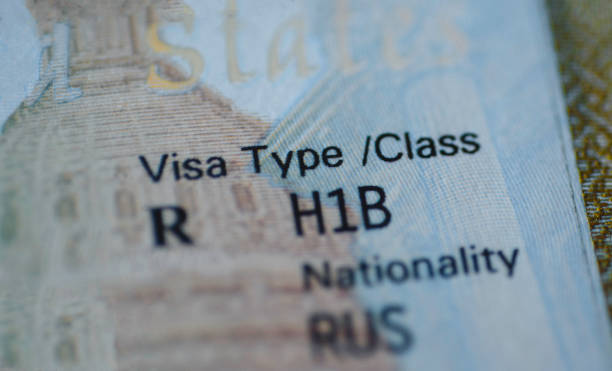
In September 2025, Proclamation 10973 required a $100,000 payment for certain new H-1B petitions, mainly those for workers outside the United States. The payment applied to petitions filed on or after September 21, 2025. Since June 2026, federal courts have stopped the agencies from collecting it.
- June 8, 2026: The federal court in Massachusetts, in a case brought by 20 states (California v. Mullin), set aside the agency policy that carries out the payment. The judge briefly paused his own ruling so the government could seek review.
- July 24, 2026: The U.S. Court of Appeals for the First Circuit refused the government's request to pause the ruling while its appeal goes forward. That left the Massachusetts ruling in force.
- September 18, 2026: The President signed Proclamation 11069, which extends the restriction for 12 more months, to September 21, 2027.
- September 30, 2026: In Global Nurse Force v. Trump, a federal judge in Northern California blocked the USCIS and Customs and Border Protection policies that implement the payment, under both the original proclamation and the extension, until the agencies complete notice-and-comment rulemaking.
- October 9, 2026: The government appealed the California order to the Ninth Circuit.
Neither court struck down the proclamations themselves. The orders block the agency policies that collect the money. In practical terms, as of October 28, 2026, USCIS is not requiring the payment. USCIS has said it intends to collect it if the court orders are lifted.
A separate case brought by the U.S. Chamber of Commerce went the other way: a federal judge in Washington, D.C. upheld the payment in December 2025, and that appeal is pending in the D.C. Circuit.

Who is affected
The payment was aimed mainly at new H-1B petitions for people outside the United States, including lottery winners abroad who would need an H-1B visa to enter. Extensions, amendments and changes of employer for people already in H-1B status in the U.S. were generally not the target. Regular H-1B filing fees still apply to every petition.
Our guide to the $100,000 H-1B fee explains who the proclamation covers and the national-interest exception.
What to do now
- Check status before each filing. An appeals court could pause either order with little notice. Look at the USCIS H-1B page and your counsel's alerts on the day you file.
- Keep records. If you file a petition that would have been covered, keep proof of the filing date and of what USCIS asked you to pay.
- If you already paid, ask an immigration lawyer about refunds. The courts have not set out a refund process.
- Budget for both outcomes. Our sponsorship cost calculator can help you plan with and without the payment.
A different proposal is also in play. In August 2026, DHS proposed a separate $103,265 fee on new cap-subject H-1B petitions filed in 2027. It is not in effect and is not covered by these court orders. See our explainer.
Common questions
I won the H-1B lottery but live abroad. Does my employer owe the payment?
Not as of October 28, 2026, because the court orders block collection. If an appeals court pauses those orders before your employer files, the payment could apply again. Your employer's counsel should check status close to the filing date.
Does it matter whether the worker is inside the U.S.?
Yes. Agency guidance issued after the 2025 proclamation focused the payment on petitions for people outside the U.S. who would need a visa to enter. Petitions asking USCIS to change or extend status for someone already in the U.S. were generally treated differently. Rules on this point have shifted, so confirm with counsel.
What's next
Three appeals courts now have a version of this dispute: the First Circuit (Massachusetts case), the Ninth Circuit (California case) and the D.C. Circuit (Chamber of Commerce case). Conflicting rulings could send the question to the Supreme Court. In the California case, a hearing on the government's request to pause district court proceedings is set for January 14, 2027.
We update our policy tracker when a court rules. For advice on a specific petition, talk to an immigration attorney.
Official sources
- First Circuit order denying stay, No. 26-1699 (July 24, 2026)
- Federal Register: Proclamation 11069, Restriction on Entry of Certain Nonimmigrant Workers (Sept. 23, 2026)
- Federal Register: Proclamation 10973 (Sept. 24, 2025)
- Global Nurse Force v. Trump, No. 4:25-cv-08454 (N.D. Cal.), docket
- USCIS: H-1B Specialty Occupations
General information, not legal advice. Immigration rules change and every case is different; talk to a qualified immigration attorney about your situation. USVisa.com is not a government website. Spot an error? Tell us.