
Study & visit
F-1 student visa
Form I-20, SEVIS fee, DS-160, interview and social media review, plus the 2026 duration-of-status rule and OPT fee proposal.
Privately operated educational resource. Not affiliated with the U.S. government.

The J-1 visa is for people taking part in State Department-designated exchange programs, from university students and researchers to physicians, au pairs and summer workers. A program sponsor issues Form DS-2019. Some J-1 holders must spend two years in their home country after the program under INA section 212(e), unless they obtain a waiver.

The J-1 exchange visitor program exists to promote educational and cultural exchange. Every J-1 participant is sponsored by an organization the State Department has designated to run a specific type of program, such as a university, hospital, government agency or private exchange organization. The sponsor screens you, issues Form DS-2019, and manages your SEVIS record through a responsible officer.
Your spouse and unmarried children under 21 may come with you in J-2 status. J-2 spouses can apply to USCIS for work authorization, but the income cannot be used to support the J-1 participant.

| Category | Typical participant |
|---|---|
| Professor and research scholar | Academics teaching or researching at universities and research institutions |
| Short-term scholar | Visiting lecturers or researchers for short stays |
| Specialist | Experts sharing knowledge in their field |
| College and university student | Degree and non-degree students funded by government, sponsor or exchange agreements |
| Secondary school student | High school students living with host families |
| Trainee and intern | Structured on-the-job training in a professional field |
| Teacher | Teachers working in accredited U.S. primary and secondary schools |
| Physician | Foreign medical graduates in U.S. graduate medical education, sponsored by ECFMG |
| Au pair | Young adults providing childcare while living with a host family |
| Camp counselor | Counselors at U.S. summer camps |
| Summer work travel | University students working seasonal jobs during their break |
| Government and international visitor | Participants in programs funded or arranged by government agencies |
Each category has its own eligibility rules, maximum duration and work conditions. Your sponsor will explain them. Professors and research scholars also face limits on repeat participation, so ask your sponsor about any bar based on earlier J status.
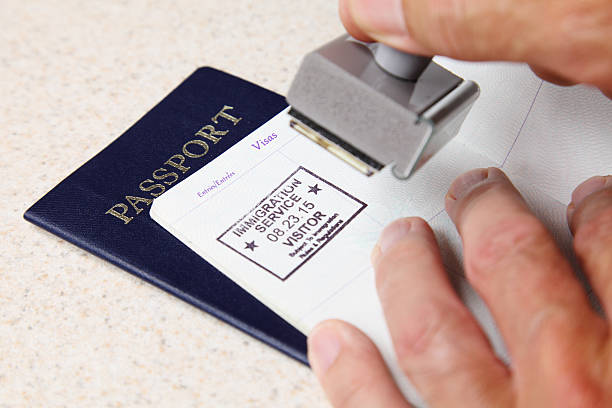
Section 212(e) of the Immigration and Nationality Act requires some J-1 participants, and their J-2 dependents, to live in their country of nationality or last residence for a total of two years after the program before they can:
The rule does not stop you from getting other visas, such as O-1 or a visitor visa, though officers will still look at whether you qualify.
You are generally subject if any of these applies:
Your DS-2019 and visa stamp include a preliminary note on whether 212(e) applies, but that note is not final. If you are unsure, you can request an advisory opinion from the State Department's Waiver Review Division.
To get a waiver, you start an application with the State Department using Form DS-3035, then follow the steps for your basis. The main bases are:
The State Department's Waiver Review Division makes a recommendation, and USCIS makes the final decision. Processing can take many months. The State Department charges a $120 processing fee for a DS-3035 waiver request as of October 2026; check the State Department and USCIS sites for any change before filing.
Do not assume you are exempt. If you are subject to 212(e) and later file for a green card or H-1B without a waiver, the application will generally be denied. Clarify your status early, ideally before accepting a job offer that depends on it.
J-1 participants, like F-1 students, are admitted for duration of status. A DHS rule published July 17, 2026 would replace this with fixed admission periods and an extension process through USCIS. On September 14, 2026, a federal court in Massachusetts postponed the rule's effective date nationwide while the case continues (Presidents' Alliance on Higher Education and Immigration v. DHS). The government appealed to the First Circuit on September 30, 2026, and briefing is scheduled into December 2026. As of late October 2026, J-1 admission remains duration of status.
| Item | Amount | Notes |
|---|---|---|
| SEVIS I-901 fee (most J categories) | $220 | Paid at fmjfee.com, as of October 2026; some government-sponsored programs are exempt, au pairs, camp counselors and Summer Work Travel participants pay a reduced $35 fee |
| Visa application (MRV) fee | $185 | As of October 2026 |
| Visa integrity fee | At least $250 under the 2025 law, adjusted for inflation | Due at visa issuance once implemented; not yet listed on the State Department fee page as of October 2026 |
| Sponsor program fees | Set by sponsor | Ask for a written breakdown before you commit |
Insurance is a significant extra cost. J program rules require coverage for you and any J-2 family members that meets minimum benefit levels, including medical evacuation and repatriation, for the entire program.
Only organizations designated by the State Department can issue a DS-2019. Before paying any fee, confirm that the sponsor appears on the State Department's list of designated sponsors for your category. Be wary of third-party agents who charge large placement fees, hold your passport, or promise a job different from the one described in your training plan. Trainees and interns should receive a Form DS-7002 training plan that describes real learning goals, not ordinary labor.
If your host employer or sponsor mistreats you, you can contact the State Department's J-1 emergency hotline or its exchange visitor email channel listed on j1visa.state.gov. Reporting problems does not by itself end your status. For other ways to study or visit, see study and visit.
Want help applying this to your situation? Email us to be connected with a participating immigration attorney, or see free and low-cost legal help.
It is a rule in INA section 212(e) requiring some J-1 participants to spend a total of two years in their home country after their program before they can get an H or L visa, a green card, or change to most other statuses in the U.S. It applies if your program had government funding, your field was on your country's skills list, or you came for graduate medical training.
Look at your DS-2019 and visa stamp, which carry a preliminary note, but treat that note as a starting point only. If it is unclear, you can ask the State Department's Waiver Review Division for an advisory opinion. Remember that the December 2024 skills list revision removed many countries, and it applies retroactively.
Yes, if they are not subject to 212(e), or if they have completed the two years at home or received a waiver. You also need a qualifying basis, such as employer sponsorship or marriage to a U.S. citizen. Filing for a green card while still subject to the rule generally leads to denial.
It varies by basis and caseload. No objection waivers have often taken several months from the State Department recommendation to the USCIS decision, while hardship and persecution waivers can take longer because USCIS must decide Form I-612 first. Check current processing information on the State Department waiver page and plan conservatively.
A J-2 spouse can apply to USCIS for an employment authorization document and, once approved, work for any employer. The earnings must not be needed to support the J-1 principal. Allow time for processing, because the J-2 cannot start work until the card is approved.
General information, not legal advice. Immigration rules change and every case is different; talk to a qualified immigration attorney about your situation. USVisa.com is not a government website. Spot an error? Tell us.
Form I-20, SEVIS fee, DS-160, interview and social media review, plus the 2026 duration-of-status rule and OPT fee proposal.
O-1 visa requirements explained: the O-1A and O-1B criteria, evidence that works, agents, fees and timelines as of October 2026.

Who qualifies for H-1B, how the wage-weighted lottery works, current filing fees, the $100,000 payment status, and extensions.

How to self-petition under the EB-2 NIW: the Dhanasar test, evidence, costs, Visa Bulletin timing and 2026 policy changes.
Student, exchange, tourist and visa-free travel options for the U.S., with fees and screening rules as of October 2026.