
Study & visit
F-1 student visa
Form I-20, SEVIS fee, DS-160, interview and social media review, plus the 2026 duration-of-status rule and OPT fee proposal.
Privately operated educational resource. Not affiliated with the U.S. government.

Most people who come to the U.S. to study, take part in an exchange program or visit use one of four routes: the F-1 student visa, the J-1 exchange visitor visa, the B-1/B-2 visitor visa, or visa-free travel under the Visa Waiver Program with an approved ESTA. Your purpose, nationality and length of stay decide which one fits.

This section covers temporary trips: earning a degree, joining an exchange or research program, attending meetings, seeing family, getting medical treatment or simply traveling. All of these are nonimmigrant purposes. You are expected to have a home abroad and to leave the United States when your authorized stay ends. If you plan to live in the U.S. permanently, start with immigration options instead.

| Your main purpose | Usual route | Key point |
|---|---|---|
| Full-time degree or academic program | F-1 student visa | Needs a Form I-20 from an SEVP-certified school |
| Exchange, research, teaching, training, au pair, summer work travel | J-1 exchange visitor | Needs a Form DS-2019 from a designated sponsor; some J-1s must later spend two years at home |
| Tourism, family visits, medical care, business meetings | B-1/B-2 visitor visa | No U.S. employment; some nationals may be asked to post a bond |
| Short trip of 90 days or less, citizen of a participating country | Visa Waiver Program and ESTA | No visa interview, but no extensions and no change of status |
Recreational study, such as a short non-credit class, is generally allowed on a visitor visa or ESTA. Study that leads to a degree or academic credit generally needs F-1 (or M-1 for vocational programs). Working in the U.S. is not allowed on B status or under the Visa Waiver Program.
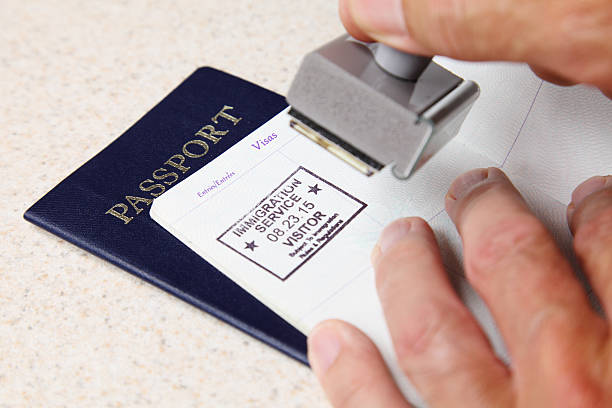
Several policies affecting students and visitors changed recently. As of October 2026:
The individual guides explain each change, who it affects, and where to check the official status.
Visa decisions are made by consular officers and CBP officers at the border. No website, agent or attorney can guarantee a visa or entry. A lawyer can help you prepare, especially if you have a past refusal, overstay, arrest or immigration violation.
Students may be able to work after graduation through Optional Practical Training, and some later move to work visas such as H-1B or O-1. Visitors in B status can sometimes request an extension or change of status from inside the U.S., but people admitted under the Visa Waiver Program generally cannot. If you are thinking about staying permanently, read adjustment of status vs. consular processing and talk to an immigration attorney before you travel, because your intent at the time you apply and enter matters.
Form I-20, SEVIS fee, DS-160, interview and social media review, plus the 2026 duration-of-status rule and OPT fee proposal.

J-1 program categories, DS-2019 and SEVIS fee, plus the 212(e) two-year home residency rule and the main waiver routes.

Allowed activities, DS-160 and interview, fees, visa bonds, travel restrictions and how long visitors can stay, as of October 2026.

Who can travel visa-free, the 2026 ESTA fee, ineligibility rules and the strict 90-day limit.
Only casually. A short recreational course that does not lead to a degree or academic credit is generally fine on a B-2 visa or ESTA. Enrolling in a degree program, or any course of study that gives credit, generally requires an F-1 or M-1 visa. Starting a full program while in visitor status can be treated as a violation, so get the right visa before you begin.
A visa is a travel document placed in your passport after a consular officer approves your application, usually after an interview. An ESTA is an online travel authorization for citizens of Visa Waiver Program countries visiting for 90 days or less. Both only let you travel to a U.S. port of entry and ask for admission; a CBP officer decides whether to admit you.
Visitors with a B-2 visa are often admitted for up to six months, while Visa Waiver Program travelers are limited to 90 days. Your actual permitted stay is the date on your I-94 record, set by the CBP officer when you arrive. Check it online after each entry, because the visa's expiration date is a different thing.
Most applicants do. Since September 2, 2025, the State Department requires in-person interviews for most nonimmigrant visa applicants, including children and older adults. Limited waivers remain for certain diplomatic categories and some people renewing a B-1/B-2 visa within 12 months of expiration. Consular officers can still require an interview in any case.
It is sometimes possible by filing Form I-539 with USCIS, but you generally cannot start classes until the change is approved, processing can be slow, and the government may question whether you misrepresented your plans when you entered as a visitor. Many students find it simpler to apply for an F-1 visa abroad. Visa Waiver Program travelers generally cannot change status at all.
General information, not legal advice. Immigration rules change and every case is different; talk to a qualified immigration attorney about your situation. USVisa.com is not a government website. Spot an error? Tell us.
Form I-20, SEVIS fee, DS-160, interview and social media review, plus the 2026 duration-of-status rule and OPT fee proposal.
J-1 program categories, DS-2019 and SEVIS fee, plus the 212(e) two-year home residency rule and the main waiver routes.
Allowed activities, DS-160 and interview, fees, visa bonds, travel restrictions and how long visitors can stay, as of October 2026.
Who can travel visa-free, the 2026 ESTA fee, ineligibility rules and the strict 90-day limit.

Reach the real visa appointment system for your country and avoid lookalike sites and fake fees.

A practical first-30 and first-90-days checklist for new arrivals: records, ID, banking, health, schools and taxes.