
Family
Family green cards
Form I-130, F1-F4 wait times, the I-864 affidavit of support, the September 2026 public charge change and current fees.
Privately operated educational resource. Not affiliated with the U.S. government.

U.S. citizens can sponsor a spouse, children, parents and siblings for green cards; green card holders can sponsor only a spouse and unmarried children. Spouses, minor unmarried children and parents of adult citizens face no annual cap. Other relatives fall into four preference categories with waits that can last years.

Most family-based green cards start the same way: a U.S. citizen or green card holder files a petition for a relative abroad or in the United States. The petition, Form I-130, asks U.S. Citizenship and Immigration Services (USCIS) to recognize the family relationship. Approval does not give the relative a green card by itself. It places the relative in a category, and the category decides how long the wait is and which steps follow.
Family cases fall into two broad groups. Immediate relatives of U.S. citizens have no annual cap, so a visa number is available as soon as the petition is approved. Family preference relatives share a limited number of visas each year and often wait years for their turn, measured by the monthly Visa Bulletin.

Under the Immigration and Nationality Act, these relatives are not subject to the yearly family limits:
Because there is no queue, the timeline for these cases depends mainly on USCIS and consular processing speed, background checks and, for some applicants, interview scheduling.
| Category | Who it covers | Who can petition | Annual numbers (statutory) |
|---|---|---|---|
| F1 | Unmarried sons and daughters age 21 or older | U.S. citizen parent | 23,400, plus unused F4 numbers |
| F2A | Spouses and unmarried children under 21 | Green card holder | About 77% of the F2 total of 114,200 |
| F2B | Unmarried sons and daughters age 21 or older | Green card holder | About 23% of the F2 total |
| F3 | Married sons and daughters of any age | U.S. citizen parent | 23,400, plus unused F1 and F2 numbers |
| F4 | Brothers and sisters | U.S. citizen age 21 or older | 65,000, plus unused numbers from F1 to F3 |
The State Department applies a per-country limit as well. People born in countries with heavy demand, such as Mexico and the Philippines, often wait much longer than others in the same category. Our family green card guide shows the November 2026 cutoff dates, and our Visa Bulletin tracker checks whether a priority date is current.
Step-relationships and adoptions can qualify, but only if specific age and timing rules are met. Fiancé(e)s of U.S. citizens use a separate nonimmigrant route, the K-1 visa.
After the petition is approved and a visa number is available, the relative finishes the process in one of two ways. Relatives abroad usually go through consular processing with the National Visa Center and a U.S. embassy or consulate. Relatives already in the United States may be able to adjust status with USCIS on Form I-485 without leaving. Eligibility rules differ sharply, and the wrong choice can trigger multi-year bars. See adjustment of status vs. consular processing.
Several changes affect family cases as of October 2026. DHS rescinded the 2022 public charge regulation effective September 18, 2026, and USCIS requires a new edition of Form I-485 for filings from that date. A new Form I-864 edition with a credit-report authorization is also in use. USCIS has expanded its discretion to deny filings without first asking for more evidence, so complete initial packages matter more than before. Details are in each guide below and in our policy tracker.
Planning a case with a complicated history, such as a prior removal order, time out of status or a past visa denial? Those facts often change which path is safe. A licensed immigration attorney can review them before anything is filed; you can email us to be connected with a participating attorney.
Form I-130, F1-F4 wait times, the I-864 affidavit of support, the September 2026 public charge change and current fees.

Spouse of a citizen vs. green card holder, proving a real marriage, the interview, and removing conditions with Form I-751.
Form I-129F, the in-person meeting rule, the 90-day wedding deadline and adjusting status after marriage.

How adjustment of status and consular processing differ, who can adjust, the 3- and 10-year bars, work and travel permits, and fees.
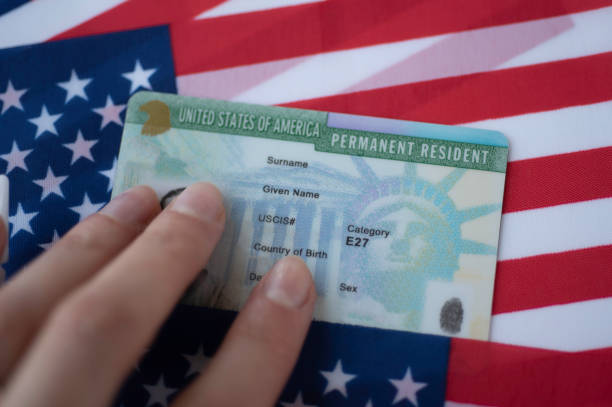
Form I-90 for 10-year cards, I-751 and I-829 for conditional cards, reentry permits, and travel and abandonment risks.
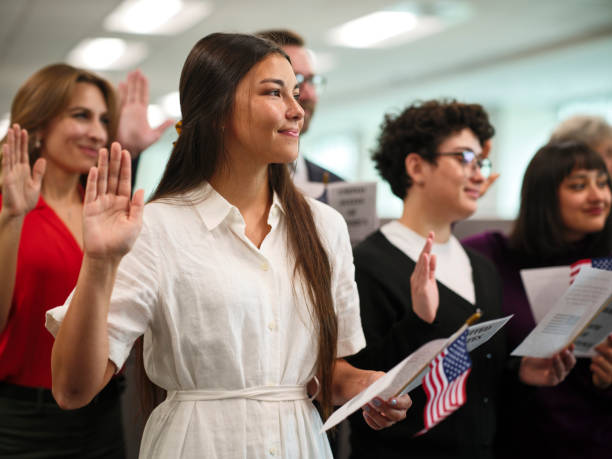
N-400 eligibility, residence and presence rules, the 2025 civics test, fees as of October 2026, and N-600 for children.
No. A lawful permanent resident can petition only for a spouse and unmarried children. To sponsor a parent, the sponsor generally must first become a U.S. citizen and be at least 21 years old. Parents of adult citizens are immediate relatives, so they do not wait in a preference line once the petition is approved, though processing and background checks still take time.
A U.S. citizen who is at least 21 may file Form I-130 for a sibling in the F4 category. F4 has some of the longest waits in the system. In the November 2026 Visa Bulletin, the general F4 final action date was in October 2012, and it was earlier for people born in India, Mexico and the Philippines. Green card holders cannot sponsor siblings.
Immediate relatives are the spouses, unmarried children under 21 and parents of U.S. citizens (when the citizen is 21 or older). They are not limited by annual quotas. Preference relatives, in categories F1 through F4, share a fixed number of visas each year and must wait until their priority date is current in the Visa Bulletin before they can get a green card.
The child may move from one category to another, which can lengthen the wait. The Child Status Protection Act can protect some children by subtracting time the petition was pending from their age, or by keeping them in the immediate relative category if the parent was a citizen before the child turned 21. The calculation is technical, so it is worth having an attorney check it.
Not directly. Family petitions cover only spouses, children, parents and siblings. A grandparent might immigrate if their own child, your parent, becomes a citizen and petitions for them. In-laws are generally sponsored by their own son or daughter, for example your spouse after your spouse becomes a U.S. citizen.
General information, not legal advice. Immigration rules change and every case is different; talk to a qualified immigration attorney about your situation. USVisa.com is not a government website. Spot an error? Tell us.
Form I-130, F1-F4 wait times, the I-864 affidavit of support, the September 2026 public charge change and current fees.
Spouse of a citizen vs. green card holder, proving a real marriage, the interview, and removing conditions with Form I-751.
Form I-129F, the in-person meeting rule, the 90-day wedding deadline and adjusting status after marriage.

How to read the monthly Visa Bulletin, with November 2026 employment and family dates for the most backlogged countries.
N-400 eligibility, residence and presence rules, the 2025 civics test, fees as of October 2026, and N-600 for children.
How adjustment of status and consular processing differ, who can adjust, the 3- and 10-year bars, work and travel permits, and fees.