
Study & visit
B-1/B-2 visitor visa
Allowed activities, DS-160 and interview, fees, visa bonds, travel restrictions and how long visitors can stay, as of October 2026.
Privately operated educational resource. Not affiliated with the U.S. government.

Citizens of 42 participating countries can visit the U.S. for tourism or business for up to 90 days without a visa by getting an approved ESTA online. As of October 16, 2026, the ESTA fee is $40.62. An approval generally lasts two years or until your passport expires. You cannot extend your stay or change status.

The Visa Waiver Program (VWP) lets citizens of participating countries come to the U.S. for tourism, business visits or transit for up to 90 days without applying for a visa at an embassy. Instead, you apply online for an Electronic System for Travel Authorization (ESTA) from U.S. Customs and Border Protection (CBP). The activities allowed are broadly the same as on a B-1/B-2 visitor visa: no employment and no study for credit.

As of October 2026, 42 countries take part: Andorra, Australia, Austria, Belgium, Brunei, Chile, Croatia, Czech Republic, Denmark, Estonia, Finland, France, Germany, Greece, Hungary, Iceland, Ireland, Israel, Italy, Japan, Latvia, Liechtenstein, Lithuania, Luxembourg, Malta, Monaco, the Netherlands, New Zealand, Norway, Poland, Portugal, Qatar, San Marino, Singapore, Slovakia, Slovenia, South Korea, Spain, Sweden, Switzerland, Taiwan and the United Kingdom (British citizens only). DHS can add, suspend or remove countries, so check the list on the official ESTA site or the DHS Visa Waiver Program page before you travel.
You must travel on an electronic passport (e-passport) from a participating country. Restrictions previously placed on Hungarian ESTAs were lifted as of September 30, 2025.
You generally cannot use the VWP, and must apply for a visa instead, if any of these applies:
An ESTA denial is not a visa refusal. You can still apply for a B visa at an embassy, though you should expect questions about why the ESTA was denied.
A 2025 law (Public Law 119-21) raised the ESTA fee from $21 to $40 starting September 30, 2025, and requires yearly inflation adjustments. DHS set the fee at $40.27 for fiscal year 2026 and $40.62 for applications approved on or after October 16, 2026. If your application is denied, you pay only the processing portion: $10.62 from that date. Fees are not refunded.
ESTA has long included an optional question about social media accounts. In December 2025 CBP proposed making five years of social media identifiers mandatory, along with other new data. As of late October 2026, the social media section of the official ESTA application was still marked optional. Because the proposal could be adopted at any time, check the current form on esta.cbp.dhs.gov, and answer every question you choose to answer truthfully.
Overstaying a VWP admission, even briefly, generally ends your eligibility for the program. Future trips will require a visa.
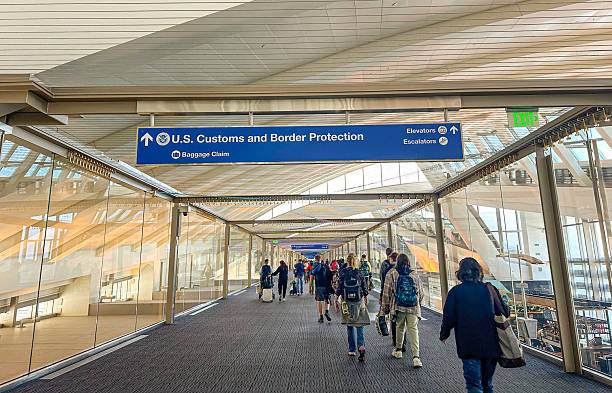
An approved ESTA allows you to board a flight or ship to the U.S. It does not guarantee entry. When you arrive, a CBP officer reviews your passport, may ask about your plans, and decides whether to admit you. Be ready to explain the purpose of your trip, where you will stay, and when you will leave. A return or onward ticket is generally required when arriving by air or sea.
Business visitors under the VWP follow the same activity limits as B-1 visitors. Attending meetings, negotiating contracts, consulting with business associates and attending conferences are generally permitted. Being employed by a U.S. company, being paid from U.S. sources for local work, or doing hands-on productive work generally is not. If your trip involves installing equipment, training staff or serving clients in the U.S., confirm the plan with an attorney before you travel.
If you are ineligible for the VWP, apply for a B-1/B-2 visa. Because most applicants now need an in-person interview, check the estimated appointment wait at your embassy well before your trip. Travelers who previously visited a restricted country for journalism, humanitarian work or official business may ask about expedited appointments; the consular section decides case by case.
Consider a B visa if you need more than 90 days, have a past immigration or criminal issue, hold a dual nationality listed above, or have traveled to a restricted country. Students should use the F-1 and exchange participants the J-1. Compare all routes in study and visit.
Want a professional review? Email us to be connected with a participating immigration attorney.
For applications approved on or after October 16, 2026, the fee is $40.62. If the application is denied, the charge is $10.62. The fee doubled from $21 to $40 on September 30, 2025, under a 2025 law, and DHS adjusts it for inflation each fiscal year. Pay only on the official CBP site or app.
An approved ESTA is generally valid for two years or until your passport expires, whichever comes first. You can use it for multiple trips during that time, each up to 90 days. You need a new ESTA if you get a new passport, change your name, or your answers to the eligibility questions change.
No. The Visa Waiver Program does not allow extensions through USCIS. CBP may allow a short extra period only in a genuine emergency, such as a medical crisis. If you expect to need more time, apply for a B-1/B-2 visa instead, which often allows stays of up to six months.
You cannot travel under the Visa Waiver Program until the issue is resolved, but you can apply for a visitor visa at a U.S. embassy or consulate. An ESTA denial is not the same as a visa refusal. Be ready to explain at the interview why the ESTA was denied, and answer all questions consistently.
Yes, if you are a Visa Waiver Program traveler. The U.S. has no airside transit option, so even passengers changing planes must go through immigration. You need either an approved ESTA or a transit or visitor visa. Check with your airline well before departure.
As of October 2026, 42 countries participate, including the United Kingdom, Ireland, most European Union countries, Australia, New Zealand, Japan, South Korea, Taiwan, Singapore, Israel, Qatar and Chile. You must travel on an e-passport from a participating country. DHS can add or suspend countries, so check the official ESTA or DHS list before you travel.
Most ESTA applications receive an answer quickly, often within minutes, but some take up to 72 hours. CBP recommends applying at least 72 hours before your trip, and earlier is safer. If your status shows pending, check back on the official site at esta.cbp.dhs.gov rather than paying a third-party site to speed it up.
General information, not legal advice. Immigration rules change and every case is different; talk to a qualified immigration attorney about your situation. USVisa.com is not a government website. Spot an error? Tell us.
Allowed activities, DS-160 and interview, fees, visa bonds, travel restrictions and how long visitors can stay, as of October 2026.

Reach the real visa appointment system for your country and avoid lookalike sites and fake fees.

Spot notario fraud, fake lottery emails, impostor calls and job scams, and learn where to report them.

Student, exchange, tourist and visa-free travel options for the U.S., with fees and screening rules as of October 2026.