
Moving
Moving to the U.S.
A practical first-30 and first-90-days checklist for new arrivals: records, ID, banking, health, schools and taxes.
Privately operated educational resource. Not affiliated with the U.S. government.

Most immigrants get health coverage through an employer, a school plan, the ACA Marketplace or, for some, Medicaid. Eligibility for Marketplace subsidies and Medicaid narrowed for many lawfully present immigrants in 2025-2026 under a federal law, with more changes in 2027. Separately, public schools must enroll children regardless of immigration status under Plyler v. Doe.

The U.S. has no single national health system for working-age adults. Most people are covered through an employer, a family member's plan, the Affordable Care Act (ACA) Marketplace or a public program such as Medicaid. Health care without coverage can be very expensive, so arranging insurance should be one of your first tasks after arriving. Our moving to the U.S. checklist lists the others.

| Situation | Common options |
|---|---|
| Employed (any work visa or green card) | Employer plan; enroll within the window after hire, usually 30 days |
| F-1 or J-1 student or scholar | School or sponsor plan; J participants must meet program insurance minimums |
| Green card holder | Employer plan or Marketplace with possible subsidies; Medicaid often after a five-year wait |
| Refugee or asylee | Refugee medical assistance for a limited time where available, Marketplace, state programs; Medicaid rules changed in 2026 (see below) |
| Visitor (B-2 or ESTA) | Private travel health insurance bought before the trip; not eligible for Marketplace plans |
| DACA recipient | Employer or state programs; not eligible for Marketplace coverage since August 25, 2025 |
| Undocumented | Emergency Medicaid, community health centers, some state- or county-funded programs |

To buy a Marketplace plan you must live in the state, not be incarcerated, and be a citizen, national or "lawfully present" immigrant. Subsidies called premium tax credits lower the monthly cost for eligible people. A 2025 federal law (Public Law 119-21) and related rules are changing who can get those subsidies:
The IRS published proposed rules on these changes on October 15, 2026; comments are due November 30, 2026, so details may change. HealthCare.gov already states that, starting January 1, 2027, only green card holders, Cuban and Haitian entrants and COFA migrants among lawfully present immigrants can get help paying for Marketplace plans. If you are affected, compare employer, state and private options early in open enrollment.
Medicaid and the Children's Health Insurance Program (CHIP) are joint federal-state programs for people with low income. Many green card holders must wait five years before qualifying. Starting October 1, 2026, federal Medicaid and CHIP eligibility for immigrants is generally limited to lawful permanent residents, Cuban and Haitian entrants, and COFA migrants. Refugees and asylees without green cards and several other lawfully present groups lost federal eligibility on that date.
States are applying these changes on their own schedules and may be sending notices to affected enrollees. Check with your state Medicaid agency, or the Medicaid.gov immigrant eligibility page, for how the rules apply to you.
Using health care, emergency services or school programs for your children is not the same as receiving cash welfare. If you are worried about the "public charge" test for a future green card, speak with an immigration attorney before declining coverage your family may need.
Hospitals with emergency departments that take Medicare must screen and stabilize anyone with an emergency medical condition, regardless of ability to pay or immigration status. Federally qualified community health centers offer primary care on a sliding fee scale based on income. Many hospitals also have financial assistance policies; ask for one before paying a large bill.
Marketplace open enrollment runs each fall for coverage starting the next year. Outside that window, you generally need a qualifying life event, such as moving to a new state, losing other coverage, getting married or gaining lawful status, to enroll through a special enrollment period, usually within 60 days of the event. Employer plans have their own windows, typically 30 days after hire. Medicaid and CHIP accept applications all year.
In Plyler v. Doe (1982), the Supreme Court held that states cannot deny children a free public education based on immigration status. Public schools from kindergarten through 12th grade must enroll eligible children who live in the district.
F-1 students may attend public high school for no more than 12 months and must pay the full cost. Children in other statuses, including dependents on work visas, generally attend public schools as residents.
States require certain vaccinations for school attendance, typically including measles, mumps and rubella, polio, diphtheria, tetanus and pertussis, hepatitis B and varicella, with exemptions that vary by state. Bring your children's vaccination records, translated if possible. Missing vaccines are often available at low or no cost through local health departments and the federal Vaccines for Children program for eligible children. Green card applicants inside the U.S. must also show required vaccinations as part of a medical exam on Form I-693.
U.S. plans have their own vocabulary. The premium is what you pay each month. The deductible is what you pay for care before the plan starts sharing costs. Copays and coinsurance are your share after that, up to an annual out-of-pocket maximum. Most plans use a network of doctors and hospitals; going out of network usually costs more.
Plyler v. Doe covers K-12 education only. Eligibility for in-state tuition and state financial aid at public colleges is set by each state, and federal student aid is generally limited to citizens and eligible noncitizens, such as green card holders, refugees and asylees. Students on F-1 visas pay international tuition. Check with the college's admissions and financial aid office and your state's higher education agency.
Want help applying this to your situation? Email us to be connected with a participating immigration attorney, or see free and low-cost legal help.
Lawfully present immigrants, including green card holders, many visa holders, refugees and people with TPS, can generally buy Marketplace plans. Subsidies are narrowing: from 2027, premium tax credits are limited by law to citizens, green card holders, Cuban and Haitian entrants and COFA migrants. DACA recipients and undocumented immigrants are not eligible to enroll, and visitors are not eligible.
Yes. Under the Supreme Court decision Plyler v. Doe, public K-12 schools must enroll children who live in the district regardless of immigration status. Schools can ask for proof of age and residence but should not require immigration documents or an SSN to enroll. F-1 students attending public high school are an exception, with a 12-month limit and full tuition.
Often, but many must wait five years after getting their green card before they qualify for full federal Medicaid, and they must meet income limits. Some states cover lawfully residing children and pregnant people without the wait. Since October 1, 2026, federal eligibility for most other lawfully present immigrants has ended, so green card holders are among the few groups still covered.
Most universities require students to enroll in the school's plan or prove equivalent coverage. J-1 exchange visitors and their J-2 dependents must carry insurance that meets State Department minimums for the whole program, including medical evacuation and repatriation coverage. Failing to keep required J coverage can lead the sponsor to end your program.
Hospitals with emergency departments that take Medicare must screen and stabilize anyone with an emergency condition, regardless of ability to pay or status. You will usually still receive a bill. Ask the hospital about its financial assistance policy, request an itemized bill, and check whether Emergency Medicaid can cover the visit.
General information, not legal advice. Immigration rules change and every case is different; talk to a qualified immigration attorney about your situation. USVisa.com is not a government website. Spot an error? Tell us.
A practical first-30 and first-90-days checklist for new arrivals: records, ID, banking, health, schools and taxes.

Who can get an SSN, when to use an ITIN, REAL ID rules and state driver's licenses for immigrants.

Form I-20, SEVIS fee, DS-160, interview and social media review, plus the 2026 duration-of-status rule and OPT fee proposal.

J-1 program categories, DS-2019 and SEVIS fee, plus the 212(e) two-year home residency rule and the main waiver routes.
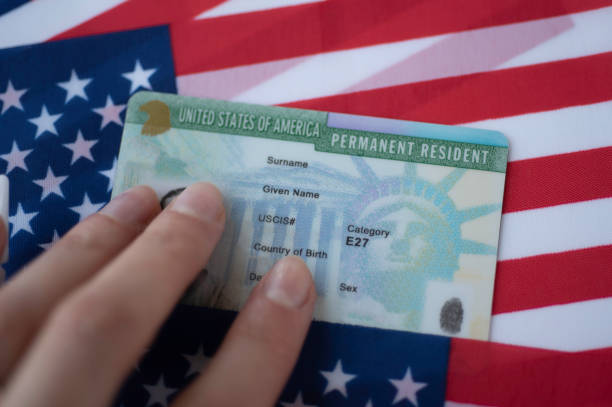
Form I-90 for 10-year cards, I-751 and I-829 for conditional cards, reentry permits, and travel and abandonment risks.